
THE IMPORTANCE OF REGULAR SKIN CHECKS FOR YOUR HEALTH
Living in Australia often means enjoying a lifestyle filled with sunshine, from beach days to backyard barbecues.
This love for the outdoors is a big part of our national identity, but it also means we have a unique responsibility to look after our skin.
With some of the highest rates of skin cancer in the world, being proactive about skin health is essential for a healthy life.
Regular checks, both at home and with a professional, are your best defence.
Australia's Sun Safety Facts
It's no secret that the Australian sun is harsh.
Our country's high levels of ultraviolet (UV) radiation mean that even short periods of unprotected sun exposure can damage your skin.
According to local health authorities, at least two in three Australians will be diagnosed with skin cancer by the age of 70.
This statistic really highlights how critical it is to consistently and effectively protect ourselves from the sun.
While many of us are careful with sunscreen in summer, UV radiation can cause damage year-round, even on cloudy days.
The Cancer Council offers detailed information on Australian sun safety, emphasising the "slip, slop, slap, seek and slide" message.
Proper sun protection is the first and most important step in preventing skin damage that could lead to more serious issues later on.
What to Look for Yourself
Getting to know your own skin is a powerful way to catch problems early.
You should aim to check your skin every few months, looking for any new spots or changes to existing moles.
The ABCDE guide is a good way to remember what to look for:
Asymmetry: One half of the mole or spot doesn't match the other.
Border: The edges are irregular, ragged, notched, or blurred.
Colour: The colour isn't uniform and may include different shades of brown or black, or patches of pink, red, white, or blue.
Diameter: The spot is larger than 6 millimetres across (about the size of a pencil eraser), though melanomas can sometimes be smaller.
Evolving: The mole is changing in size, shape, or colour.
Remember to check your entire body, including areas that don't see the sun, such as the soles of your feet, between your fingers and toes, and under your nails.
Why Professional Skin Checks Matter
Although checking your own skin is a vital first step, it doesn't replace a professional examination.
Some spots can be in hard-to-see places, like your scalp or back, and telling the difference between a harmless mole and something more concerning needs a trained eye.
This is why regular check-ups with experienced doctors are so important.
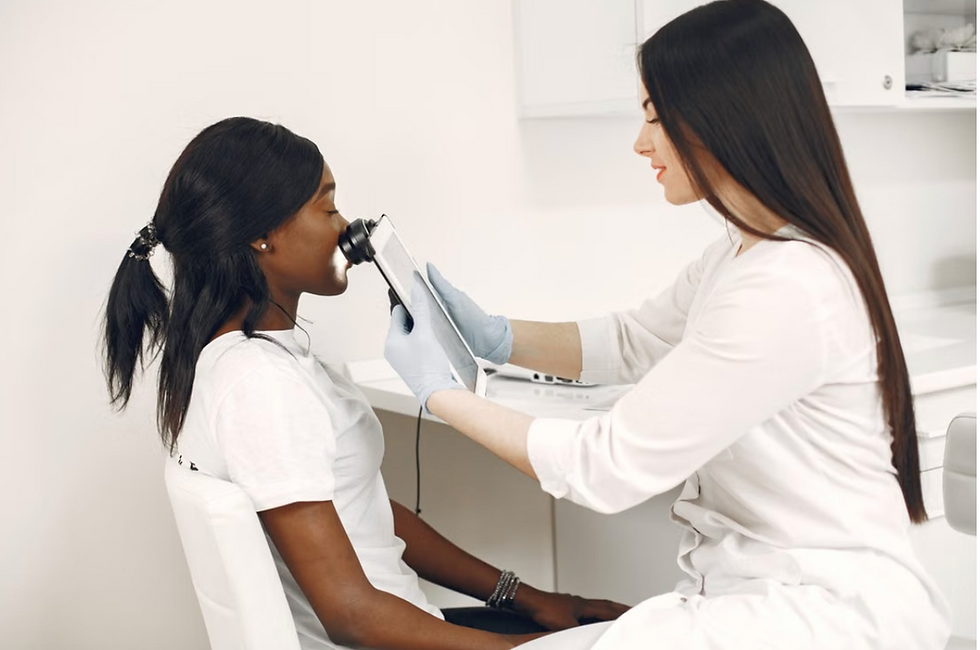
A professional skin check involves a thorough, head-to-toe examination.
Your doctor will use a special magnifying tool called a dermatoscope to examine your skin more closely, allowing them to see features invisible to the naked eye.
They can assess any spots you're worried about, find anything suspicious you might have missed, and create a record of your skin to track changes over time.
Preparing for Your Appointment
Before your appointment, it's a good idea to do a self-check and note down any spots you're particularly concerned about.
This way, you won't forget to mention them during the examination.
On the day of your appointment, avoid wearing makeup or fake tan.
These can cover your skin and make it hard for the doctor to do an accurate assessment. It's also best to remove any nail polish from your fingernails and toenails, as skin cancers can develop under the nails.
Be ready to talk about your personal and family history of skin cancer, as well as your usual sun exposure habits.
Beyond Just Moles
When we think about skin cancer, our minds often jump straight to moles.
While it's crucial to watch moles for changes, it's also important to know about other signs. Not all skin cancers start as moles; they can show up as small, scaly patches, sores that won't heal, or firm red lumps.
Basal cell carcinoma (BCC) and squamous cell carcinoma (SCC) are the most common types of skin cancer and often look different from melanoma.
A BCC might look like a pearly or waxy bump, while an SCC can appear as a rough, scaly patch or a sore that bleeds easily.
Paying attention to any new or changing spot on your skin, not just your moles, is key to staying on top of your health.
Taking a proactive approach to your skin health is one of the best things you can do for your long-term well-being.
Combining regular self-checks with annual professional examinations helps you feel confident that you're doing everything possible to stay safe under the Australian sun.


